TL;DR
- 60% of Google searches now end without a click to any website, according to a Forbes Business Council analysis of SparkToro and Datos clickstream data. Traditional “get more traffic” advice ignores where most of your audience lives.
- Google AI Overviews reduce organic click-through rates for the #1 position by 58%, per an Ahrefs study of 300,000 keywords published in February 2026, making brand demand - not just rankings - the new traffic driver.
- The promotion playbook that works in 2026 follows a “Demand First, Capture Second” sequence: seed your brand across zero-click platforms (Reddit, AI engines, social), then funnel that awareness into owned channels like email, which delivers $36 for every $1 spent.
- ChatGPT referral traffic to ecommerce sites grew 1,079% in 2025 and converts 31% higher than non-branded organic search, making AI engine visibility a real promotion channel - still small in volume, but high in intent.
I spent January staring at a Google Analytics dashboard that made no sense. Organic sessions down 14% year over year. Branded search up. Direct traffic up. Revenue flat. What was happening?
The answer came when I stopped looking at traffic and started looking at where people were actually finding us. They weren’t clicking our search results. They were seeing our brand in AI Overviews, reading about us in a Reddit thread, catching a mention on a podcast, then typing our URL directly. The click wasn’t gone. It just moved.
This article gives you a framework for promoting your website that accounts for the reality that most people won’t find you by clicking a blue link anymore. You’ll get the specific channels that still send real traffic, the ones that build demand without clicks, and a practical system for connecting the two. Five moves. Deep.
The old playbook is broken (and most “how to get traffic” articles won’t admit it)
Every article I read while researching this piece gave some version of the same advice: optimize for SEO, post on social media, run paid ads, build backlinks. Solid fundamentals. But they describe a world that doesn’t quite exist anymore.
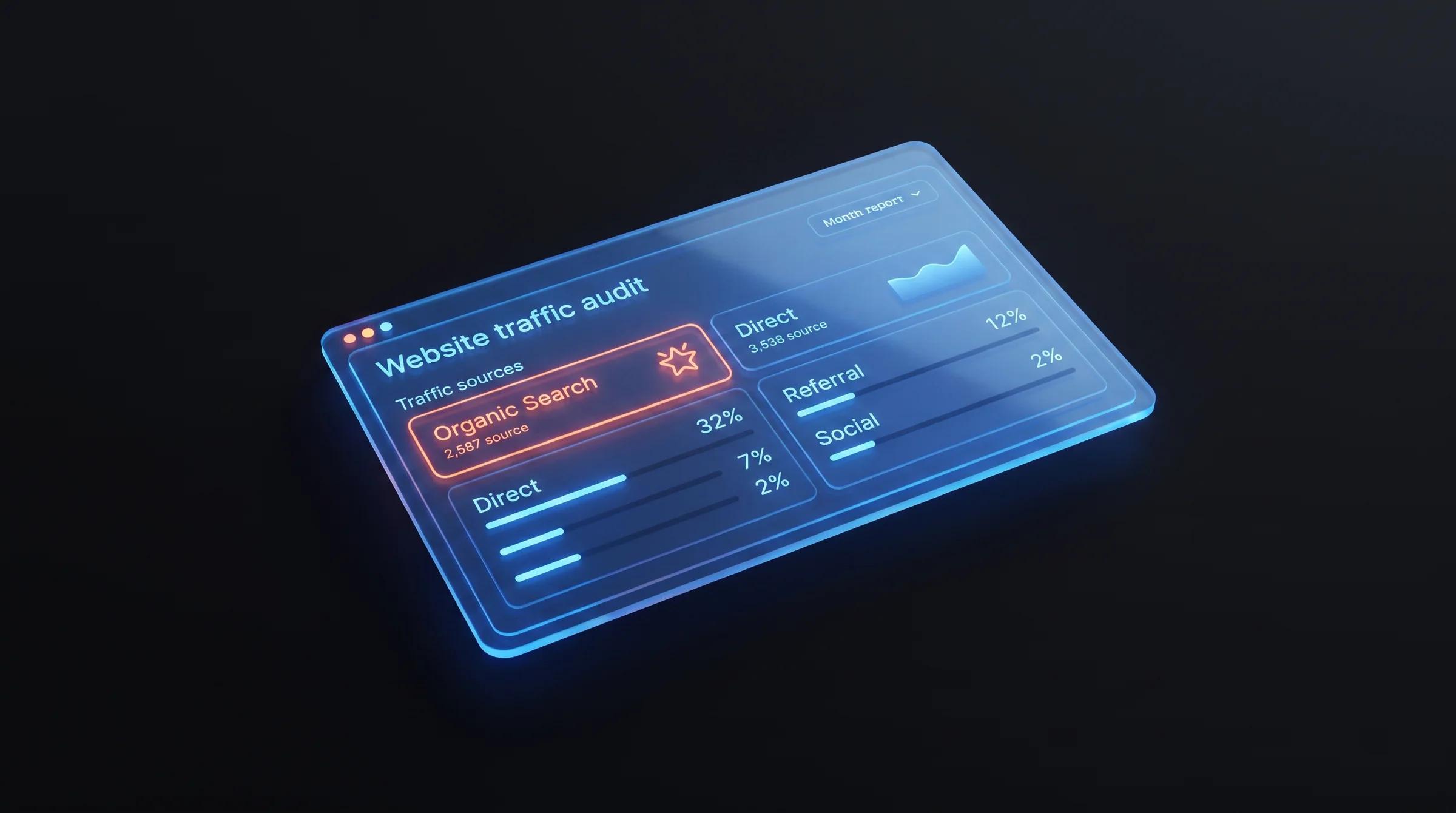
Here’s the number that should reframe how you think about website promotion: nearly 60% of Google searches end without a single click to any website. That’s from SparkToro’s analysis of Datos clickstream data, cited by Forbes in March 2026. The original SparkToro study pegged it at 58.5% in the U.S. and 59.7% in the EU. More than half of all searches go nowhere.
And it’s getting worse. An Ahrefs study published in February 2026 found that Google AI Overviews now reduce the organic click-through rate for the #1 ranking page by 58%. That study analyzed 300,000 keywords and compared December 2023 data (pre-AI Overviews) to December 2025. The position-one CTR for AI Overview keywords dropped from 7.3% to 1.6%. For every 100 clicks you could historically earn, Google now keeps 58.
So what are people doing instead of clicking? A Pew Research Center study tracked 900 U.S. adults browsing behavior in March 2025 and found that when users encountered an AI summary, they clicked a search result only 8% of the time - versus 15% when no AI summary appeared. Twenty-six percent just closed their browser entirely.
Think about that. A quarter of people who saw an AI-generated answer just… left. They got what they needed without visiting a single website. And only 1% of users clicked a citation link within the AI summary itself.
Does this mean website traffic is dead? No. But it means the order of operations for promotion has flipped. You can’t just rank and expect visitors. You need to build demand first, then capture it.
The Demand-First Promotion Framework
Here’s the mental model I use, and it’s the thing I wish someone had drawn on a napkin for me two years ago.
Demand-first promotion is the practice of building brand awareness and trust on platforms where people spend time but don’t click away from, then converting that awareness into direct visits to your owned properties.
Think of it like this: traditional website promotion is fishing with a net. You cast it wide - SEO, ads, social posts with links - and hope to catch traffic. Demand-first promotion is more like becoming the lake everyone wants to fish in. You make your brand so visible across the surfaces people already use that when they’re finally ready to act, they come straight to you.
The framework has two phases, and the order matters:
Phase 1: Seed demand on zero-click surfaces. Show up where people find answers but don’t leave. This means AI Overviews, ChatGPT citations, Reddit discussions, podcast appearances, and social feeds. Your goal here isn’t a click. It’s a brand impression that sticks.
Phase 2: Capture demand through owned channels. Once people know your name, give them a reason to come directly. This means email, direct URL visits, branded search, and community. Your goal here is converting awareness into a relationship you own.
| Phase | Goal | Key Channels | Primary Metric |
|---|---|---|---|
| Seed Demand | Brand recall | AI engines, Reddit, social media, podcasts, guest content, short-form video | Brand mention volume, branded search growth |
| Capture Demand | Owned relationship | Email list, direct traffic, branded organic search, on-site community | Email subscribers, direct sessions, branded query volume |
Most “how to promote your website” advice lives entirely in Phase 2. It assumes people are already looking for you. The real work happens in Phase 1.
“The best way to promote your website in 2026 is to stop obsessing over traffic volume and start obsessing over brand visibility. If Google disappeared tomorrow, how much traffic would you still get? That number is your actual brand strength. Everything else is rented.”
- Adapted from the Demand-First Promotion Framework
Phase 1: Three channels that build demand without needing a click
When I talk about “seeding demand,” I’m not being abstract. These are specific, repeatable tactics that put your brand in front of the right people on platforms that increasingly keep users from leaving.
1. Get cited by AI answer engines
This one’s still early, but the trajectory is impossible to ignore. A Visibility Labs analysis of 94 ecommerce sites found that ChatGPT referral visits grew 1,079% over 2025 - from 1,544 visits in January to 18,202 in December. The total volume is still small, about 1.48% of non-branded organic revenue. But here’s the part that matters: ChatGPT traffic converted at 1.81% versus 1.39% for non-branded organic search. Thirty-one percent higher.
Why? Visibility Labs calls it “intent compression.” By the time someone clicks through from ChatGPT, they’ve already refined their needs. They’re closer to buying.
Gartner predicts traditional search volume will drop 25% in 2026 as users shift to AI-powered answer engines. Google’s AI Overviews now reach more than 2 billion monthly users. ChatGPT serves 800 million users each week.
So how do you get ChatGPT, Perplexity, or Google’s AI Overviews to mention your brand?
Publish original data and frameworks. AI tools cite sources with unique, factual claims. If your content says the same thing as 50 other articles, there’s no reason for an LLM to pick yours. Original research, surveys, case studies with specific numbers - that’s what gets cited.
Structure content for extraction. Use clear definitions, direct answers to questions in your opening sentences, and well-labeled sections. AI models pull passages, not vibes. Add FAQ sections - AI engines rely heavily on question-and-answer pairs when building responses.
Build topical authority. Publish multiple pieces on the same subject cluster. AI tools are more likely to cite a source that appears authoritative across a topic, not just one random blog post.
Add structured data. Schema markup - especially Article, Organization, FAQ, and HowTo - helps AI engines parse what your content is about.
Is this guaranteed to drive massive traffic tomorrow? No. But Pew Research found that 18% of all Google searches produce an AI summary, and that number is climbing. The brands showing up in those summaries are earning free visibility at scale. Even if only 1% of users click the source link, that 1% shows up pre-qualified.
2. Seed your expertise inside Reddit and online communities
I resisted Reddit for years. It felt messy, hostile, impossible to scale. Then I noticed something: Reddit threads kept showing up in search results for queries I cared about. Google loves them. AI tools cite them constantly.
Pew’s browsing study confirmed that Reddit is one of the three most commonly cited sources in both Google AI summaries and standard search results, alongside Wikipedia and YouTube. Together they accounted for 15% of all sources listed in AI summaries.
Digiday reported in mid-2025 that multiple news publishers saw notable increases in referral traffic from Reddit. Reddit sent 34.4 million pageviews to publishers in May 2025, up from 29.9 million in May 2024 - a 15% year-over-year increase. And Google sends Reddit itself massive traffic: 1.2 billion referrals from Google Search in April 2025, double the prior year. When your advice sits inside a highly visible Reddit thread, you benefit from that visibility even without a direct click.
But Reddit hates self-promotion. Show up and drop links to your website, and you’ll get downvoted into oblivion. The move is different.
You participate genuinely. Answer questions with real expertise. Mention your brand only when it’s directly relevant and helpful. Over time, your username builds credibility, your comments accumulate upvotes, and those threads start ranking in Google. People see your recommendations, Google your brand, and visit your site directly.
It’s slow. It’s not scalable the way a paid campaign is. But it compounds, and nobody can outspend you on authenticity.
How to start: Find 3 to 5 subreddits where your target audience asks questions you can genuinely answer. Set a calendar reminder to contribute 2 to 3 thoughtful replies per week. Don’t link to your site unless someone specifically asks for a resource. The brand impressions will convert on their own timeline.
3. Use short-form video as a brand-seeding machine
According to Wyzowl’s 2026 video marketing report, 91% of businesses use video as a marketing tool, and 82% of video marketers say video has helped them increase web traffic. That number has held steady for years, which tells you something: this isn’t a fad, it’s infrastructure.
And 84% of consumers want to see more videos from brands. When asked how they’d most like to learn about a product or service, 63% said they’d prefer a short video - beating text-based articles (12%), infographics (7%), and webinars (4%) combined.
But I’m not talking about creating polished brand videos and hoping for clicks. I’m talking about short-form content - TikTok, Instagram Reels, YouTube Shorts, LinkedIn video - that makes people remember your name.
Short-form video is a demand-seeding machine because it works even without a click. Someone watches your 45-second tip, doesn’t tap through to your profile, but remembers your advice next time they need help. That’s a brand impression. String enough of them together and you’ve built familiarity that converts into direct traffic weeks or months later. Video accounts for 82% of all global internet traffic in 2026, and short-form video is the #1 ROI format for 49% of marketers.
Your content doesn’t need to go viral. It needs to be consistently useful.
Phase 2: Converting demand into traffic you actually own
Seeding demand is only half the job. If you don’t have a system to catch the people who come looking for you, all that brand-building evaporates. Here’s where the “traditional” promotion advice applies, but with sharper focus.
1. Email is still the highest-converting owned channel (and it’s not close)
I know. Email feels boring. Everyone says “build your list” and nobody explains why it’s so much more effective than every other traffic source.
Here’s the number: email marketing delivers $36 for every $1 spent, according to Forbes Advisor’s May 2026 analysis. Retail and ecommerce brands see returns as high as $45 per dollar. No other channel comes close.
A Forbes survey of 41 brands found that 72% ranked email as their single most effective marketing channel, beating paid social (60%) and influencer partnerships (36%). And this wasn’t about blasting discount codes. The brands seeing the best results combined education with promotion.
Here’s the connection to website traffic that people miss: every email you send is a direct-traffic generator that bypasses Google entirely. No algorithm changes. No AI Overviews eating your clicks. No zero-click problem. You write an email, include a link, and people who care about your content click it.
How many visitors does your email list drive per month? If you don’t know that number, you’re probably under-investing in the one channel that’s completely immune to the zero-click trend.
Growing your email list requires giving people a genuine reason to subscribe. A generic “sign up for our newsletter” form converts at roughly 1 to 2%. A specific lead magnet - template, calculator, checklist, free tool - that solves an immediate problem converts at 5 to 15%. The quality of your opt-in offer determines the quality of your traffic engine.
2. SEO still matters - but the strategy has shifted
I’m not here to tell you SEO is dead. It isn’t. Organic search still drives 53% of total website traffic, and direct traffic accounts for another 25%. Google still sends more referral traffic than any other single source.
But the type of SEO that works has changed. The old approach - target high-volume informational keywords, rank #1, collect clicks - is exactly the content that AI Overviews cannibalize. If someone can get the answer from Google’s AI summary, why would they click through to your article about “what is content marketing”?
The SEO that still drives traffic targets three things:
-
Bottom-of-funnel comparison and decision queries. “HubSpot vs Salesforce for small agencies” or “best project management tool for remote teams under 10 people.” These are specific, purchase-intent queries that AI Overviews handle poorly because the answer depends on context.
-
Experience-based content that AI can’t replicate. “I tested 7 email platforms for 90 days, here’s what happened” contains first-hand data that no language model can generate from training data alone.
-
Long-tail queries with low AI Overview trigger rates. The Pew study found that only 8% of one or two-word searches triggered AI summaries, while 53% of searches with 10+ words did. But many niche, long-tail queries still don’t trigger them. That’s your opportunity.
The meta-point: stop writing content designed to rank for broad informational terms. Write content designed to be the last thing someone reads before they make a decision. That content still gets clicked because it can’t be summarized by an AI snippet.
3. Make direct traffic your north star metric
Here’s a thought experiment. If Google disappeared tomorrow, how much traffic would your website get? Whatever that number is, it represents your actual brand strength. Everything else is rented.
Direct traffic - people typing your URL or clicking a bookmark - is the purest signal that your demand-seeding is working. When branded search queries increase, when direct sessions grow month over month, when people tell you “I heard about you on Reddit” or “ChatGPT recommended you,” that’s the framework in action.
Track these four numbers monthly:
| Metric | What It Tells You | Where to Find It |
|---|---|---|
| Direct traffic sessions | Brand strength and recall | Google Analytics > Traffic acquisition |
| Branded search volume | Whether demand-seeding is converting to search intent | Google Search Console > Queries containing your brand name |
| Email-driven sessions | How well your owned channel generates traffic | UTM-tagged email links in GA4 |
| AI referral traffic | Whether you’re showing up in ChatGPT/Perplexity | GA4 > Referral traffic from chat.openai.com, perplexity.ai |
If direct traffic and branded search are growing, your promotion strategy is working - even if total organic sessions are flat or declining. You’ve shifted from renting traffic to owning demand.
The 80/20 of website promotion in 2026
If this all feels like a lot, here’s where I’d focus if I had limited time and a small team.
Pick one zero-click demand channel - Reddit, short-form video, or AI optimization - and commit to it for 90 days. Don’t dabble in all three. Go deep on one. Meanwhile, build your email list like your business depends on it, because increasingly, it does. And shift your SEO strategy away from high-volume informational content toward bottom-of-funnel decision content that AI can’t easily summarize.
That’s it. One demand channel. Email. Decision-intent SEO. Everything else is a distraction until those three are working.
If you’d rather have a team handle the strategy and execution while you focus on running your business, that’s exactly what LoudScale does: full-service promotion strategies built for how search and discovery actually work right now.
Frequently Asked Questions About Website Promotion
How do I drive traffic to my website for free?
The highest-impact free traffic strategies in 2026 are email marketing (once you’ve built a list), bottom-of-funnel SEO content targeting specific comparison and decision queries, and genuine participation in Reddit communities where your audience asks questions. Each of these takes time rather than money, but they compound in ways that paid channels don’t.
Does SEO still work for driving website traffic?
SEO still works, but the type of content that drives clicks has shifted. Google AI Overviews reduce click-through rates for informational queries by 58% according to Ahrefs, so broad “what is X” content gets far fewer clicks than it used to. Decision-stage content, experience-based articles, and niche long-tail queries still drive strong organic traffic because AI summaries handle them poorly.
What is zero-click marketing and why does it matter for website promotion?
Zero-click marketing is the practice of building brand visibility on platforms where users consume content without clicking through to external websites. Zero-click marketing matters because 60% of Google searches now end without a click, so brands that only optimize for clicks miss the majority of their potential audience.
Can ChatGPT and AI tools actually send traffic to my website?
Yes, but the volume is still small. A Visibility Labs study of 94 ecommerce sites found ChatGPT referral traffic grew 1,079% over 2025 and converted 31% higher than non-branded organic search. ChatGPT referral traffic currently represents about 1.5% of organic search revenue for the sites studied, but the trajectory suggests this channel will keep growing as AI tool usage increases.
What is the single most effective way to promote a website in 2026?
Email marketing is the single highest-ROI promotion channel, generating $36 per dollar spent on average. A Forbes survey of 41 brands found that 72% rank email as their most effective channel. Email bypasses the zero-click problem entirely because every send goes directly to your audience’s inbox without depending on any algorithm.
Sources
- Forbes Business Council, “The Zero-Click Economy: Why 60% Of Searches End Without A Click,” March 2026
- Ahrefs, “Update: AI Overviews Reduce Clicks by 58%,” February 2026
- Forbes Advisor, “49 Top Email Marketing Statistics,” May 2026
- Search Engine Land, “ChatGPT ecommerce traffic converts 31% higher than non-branded organic search,” February 2026
- Search Engine Journal, “Pew Research Confirms Google AI Overviews Is Eroding Web Ecosystem,” July 2025
- Digiday, “Reddit becomes a more noticeable source of publisher traffic,” June 2025
- Forbes, “Your 2026 Marketing Strategy Edge: Email, Education, And Authenticity,” December 2025
- Wyzowl, “Video Marketing Statistics 2026”
- Search Engine Land, “Mastering generative engine optimization in 2026: Full guide,” February 2026

LoudScale Team
Growth Marketing Specialists
The LoudScale team shares practical strategies and experiments across search and AI visibility, content authority, account-based demand, lifecycle systems, analytics, and responsible AI.